WE HAVE A LANGUAGE PROBLEM
Last week, Susan Lee Colby and I attended the Century Summit hosted by the Stanford Center on Longevity — and one theme kept coming up for us:
Do we have a language problem (aka opportunity?!) when it comes to getting older?
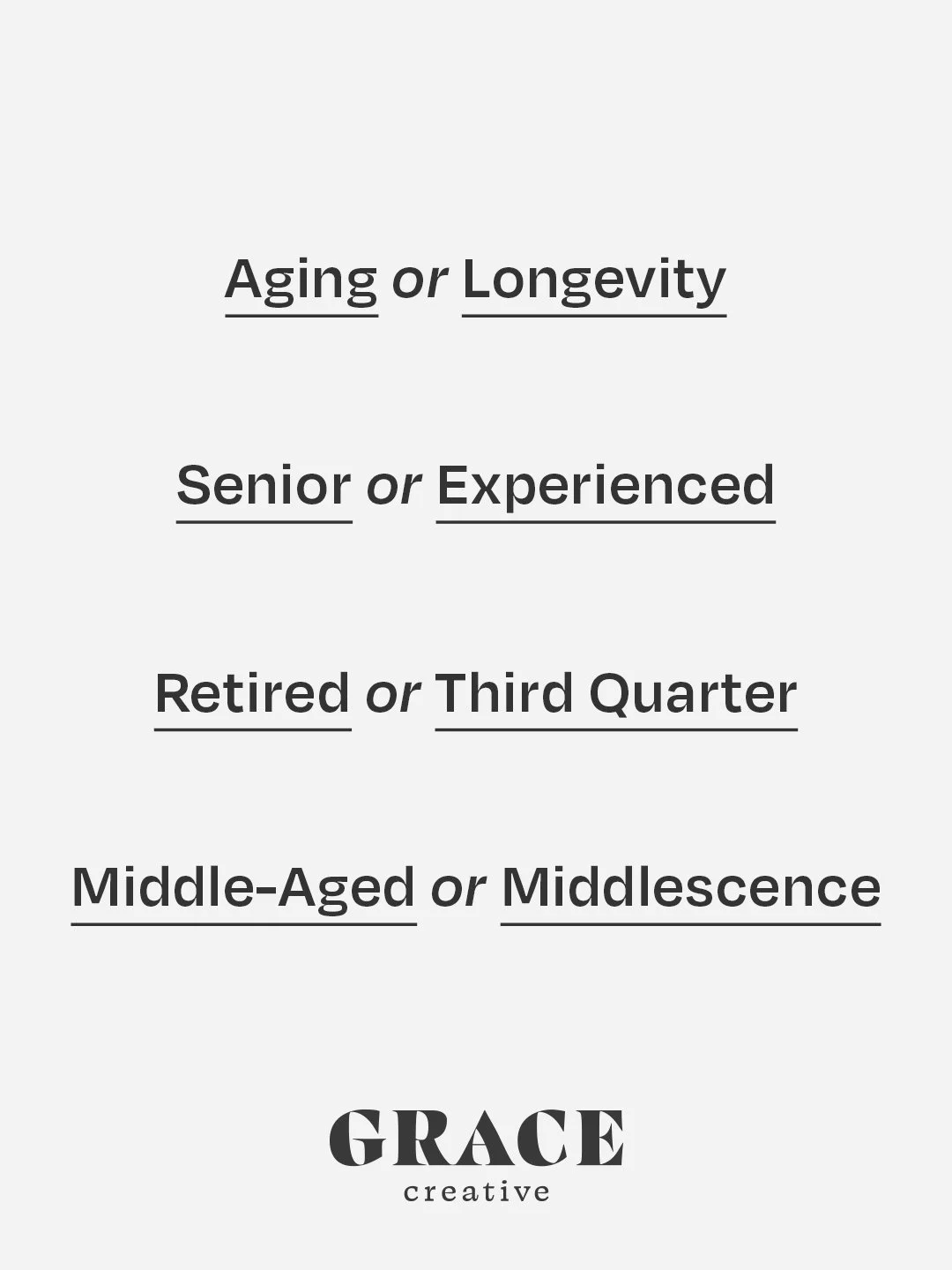
“Aging.”
“Senior.”
“Retired.”
“Old.”
No one wants to be described by any of these words.
They’re limiting, inaccurate, and they conjure an image of something outdated 👵🏼. Which is ironic, because aging is something we only get to do IF WE'RE LUCKY. And if we're lucky, aging affects every single one of us.
So what are the right words? How do we talk about this phase of life? About age?
• Longevity?
• Second half?
• Third quarter?
• Middlescence?
• Co-generational (vs. multi-generational)?
Living longer today looks nothing like it did even 10–20 years ago. People are healthier. Working longer. Starting companies. Reinventing themselves.
And language really matters.
Finding the right words — and getting the broader ecosystem to actually use them — can meaningfully shift how we perceive getting older… in a way that better reflects the reality of the 100-year life many of us will (hopefully) get to live.
Is the goal to change these words? Avoid saying “old”?
Or to own them — because old is gold?
Curious how others are thinking about this — what’s the right language for the 100-year life?
Stanford Center on Longevity Team — perhaps this is a workshop for next year?
Grace Creative is a leading advertising agency redefining marketing to consumers 50+.